www.happypleco.com
Wednesday, 30 October 2013
Friday, 25 October 2013
D.I.Y. simple fry rearing box
This is a very simple, cheap
but effective fry rearing box. This example does not have proper floating
supports as it's resting on a root in my tank. Floating support or something to
anchor the box to the side of an aquarium would be easy to ad.
What you need: plastic box with a lip at the top to hold some air, silicone, carpet knife, filter foam, and a spare small airlift filter:
A hole was cut at one end of the box and sealed with filter foam, attached with silicone. This will drain the box and keep the water level the same as in the tank it is in. The air driven filter will pump in fresh water from the tank into the box:
Side view:
From above:
This is a variation of a design that has been used by aquarists for many years.
The benefit of this type is that air driven filter constantly supplies the fry/eggs with fresh water from the same tank that they originally were laid in/hatched in. This method also keeps the water conditions stable which is extremely important with fragile fish, something that can be harder to achieve in a small
separate tank.
Another benefit is that the breeder box makes it easy to make sure that the fry eat, the small space makes it possible to target feed fry while fry in a larger tank might not even find the food in time.
Maintenance of the rearing box is still important though and uneaten food and bacteria on the sides should be removed/cleaned on a regular basis. A turkey baster works quite well for this purpose, and a tooth brush can be used to clean the sides.
Depending on species and strength of the air pump used it can also be a good idea to add an air stone for increased water circulation.
Personally I use this type for plecos and corys; I ad gravel/sand from the main tank, some small plants/moss/roots/oak leafs/ for the fry to hide in.
Remember that we want the fry to feel comfortable and not stressed as this increases their growth rate and lowers the risks of deaths.
What you need: plastic box with a lip at the top to hold some air, silicone, carpet knife, filter foam, and a spare small airlift filter:
A hole was cut at one end of the box and sealed with filter foam, attached with silicone. This will drain the box and keep the water level the same as in the tank it is in. The air driven filter will pump in fresh water from the tank into the box:
Side view:
From above:
This is a variation of a design that has been used by aquarists for many years.
The benefit of this type is that air driven filter constantly supplies the fry/eggs with fresh water from the same tank that they originally were laid in/hatched in. This method also keeps the water conditions stable which is extremely important with fragile fish, something that can be harder to achieve in a small
separate tank.
Another benefit is that the breeder box makes it easy to make sure that the fry eat, the small space makes it possible to target feed fry while fry in a larger tank might not even find the food in time.
Maintenance of the rearing box is still important though and uneaten food and bacteria on the sides should be removed/cleaned on a regular basis. A turkey baster works quite well for this purpose, and a tooth brush can be used to clean the sides.
Depending on species and strength of the air pump used it can also be a good idea to add an air stone for increased water circulation.
Personally I use this type for plecos and corys; I ad gravel/sand from the main tank, some small plants/moss/roots/oak leafs/ for the fry to hide in.
Remember that we want the fry to feel comfortable and not stressed as this increases their growth rate and lowers the risks of deaths.
Monday, 21 October 2013
Wild Brown Discus, Symphysodon aequifasciatus axelrodi t-shirt design @: www.happypleco.com

The above Discus design is a new t-shirt design from: www.happypleco.com, this design took ages to complete but I think it was worth it in the end.
This fish deserves a good representation being known as the King of Tropical Fish.
Labels:
aequifasciatus,
axelrodi,
brown,
cartoon,
discus,
gift,
Symphysodon,
t-shirt,
wild
Wednesday, 9 October 2013
Update; L129, Hypancistrus debilittera fry
The fry of my L129, Hypancistrus debilittera that were kicked out from the cave as larva on the 30th of September are now 10 days old and are doing very well.
There is still the six of them residing in a small floating container. As the breeding box I had planned to use for this type of situations broke recently I'm in the process of building a new one which if it works well will be presented as a DIY post here in the future.
As you can see from the rounded bellies and yellow coloration the fry are still absorbing their yolk sacks, the critical stage in rearing pleco fry starts when they are ready to eat as they need allot of food that easily pollute the water if uneaten.
I'll keep you posted on the progress with these.
Labels:
breeding,
debilittera,
fry,
hypancistrus,
l-number,
l129,
pleco,
rearing
Thursday, 3 October 2013
Happy Pleco

Happy Pleco provides designs, t-shirts and gifts for the conscious aquarist.
Melander’s Aquarium will otherwise remain as it is apart from that the occasional post might reveal new designs and products from Happy Pleco.
Please feel free to have a look at www.happypleco.com, and chose the relevant shop for your location at the top bar to view the designs. More designs will be added over time.
If you like this idea, or don’t please let us know @: happypleco@gmail.com
It would also be great to hear some opinions on what designs you would like to see in the future!
Happy Fishkeeping!
Tuesday, 1 October 2013
Hypancistrus debilittera, L129, kicked out larva
Our male Hypancistrus debilittera, L129 still has not gotten the hang of raising the little ones.
I collected six newly born yesterday that had been kicked out from the breeding cave. This can happen with inexperienced or stressed males.
In this case it was the males second spawn and he is still learning, hopefully practice will make perfect.
These little larva have gotten their own net container in the parents tank, an airstone ads oxygen and circulates the water.
The temperature at the time of spawning was 26C and the pH 6, I might write a proper breeding report about this species in the future.
I collected six newly born yesterday that had been kicked out from the breeding cave. This can happen with inexperienced or stressed males.
In this case it was the males second spawn and he is still learning, hopefully practice will make perfect.
These little larva have gotten their own net container in the parents tank, an airstone ads oxygen and circulates the water.
The temperature at the time of spawning was 26C and the pH 6, I might write a proper breeding report about this species in the future.
Labels:
breeding,
debilittera,
egg,
fanning,
fry,
hypancistrus,
kicked,
l129,
larva,
out,
sack,
spawn,
yolk
Tuesday, 24 September 2013
R.I.P, death of a red & black Ancistrus male, rivalty with L134 leads to death
I'm saddened to write this but I do not want to write about only the positive sides and successes of fishkeeping.
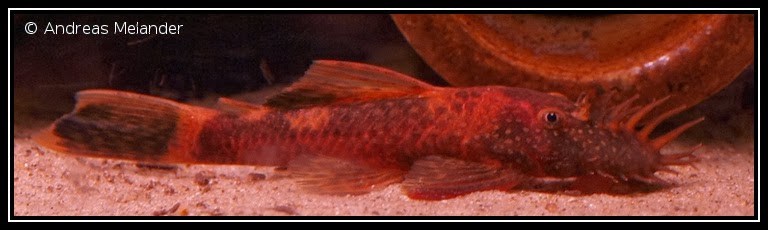
My alpha male, calico red & black Bristlenose pleco was killed yesterday. The photo was taken when the fish was young but in it's adult form it was a very impressive fish.
This fish was approximately 4 years old, in it's prime and should have had many more years, it has supplied me with a constant stream of quality fry.
I foolishly decided to house the fish temporarily with my Peckoltia compta / L134 group to give it a break from breeding. I knew there could be trouble between the males but did not expect it to lead to it's death. There were more than six empty caves in the tank but this was not enough. The carcass bore clear signs of fighting with another pleco, my suspicion points to the L134 alpha male.
This is something that could easily have been avoided and a decision I will regret. So a warning to anyone wanting to move several boisterous male loricariids into the same tank, monitor them carefully and obviously provide plenty of space and caves!
Subscribe to:
Posts (Atom)